


MEAN stack is a popular set of tools for building full-stack web applications, including a set of JavaScript frameworks, which are MongoDB for the database, Express and Node.js for the backend, and Angular for the frontend. Instead of learning each tool on its own, working on MEAN stack projects helps you see how they function together as one system.
In this article, you’ll find a list of MEAN stack projects from beginner to advanced levels, designed to help you build real applications and grow your full-stack skills step by step.
>> You may be interested in: MERN Stack vs MEAN Stack: What is the Difference?
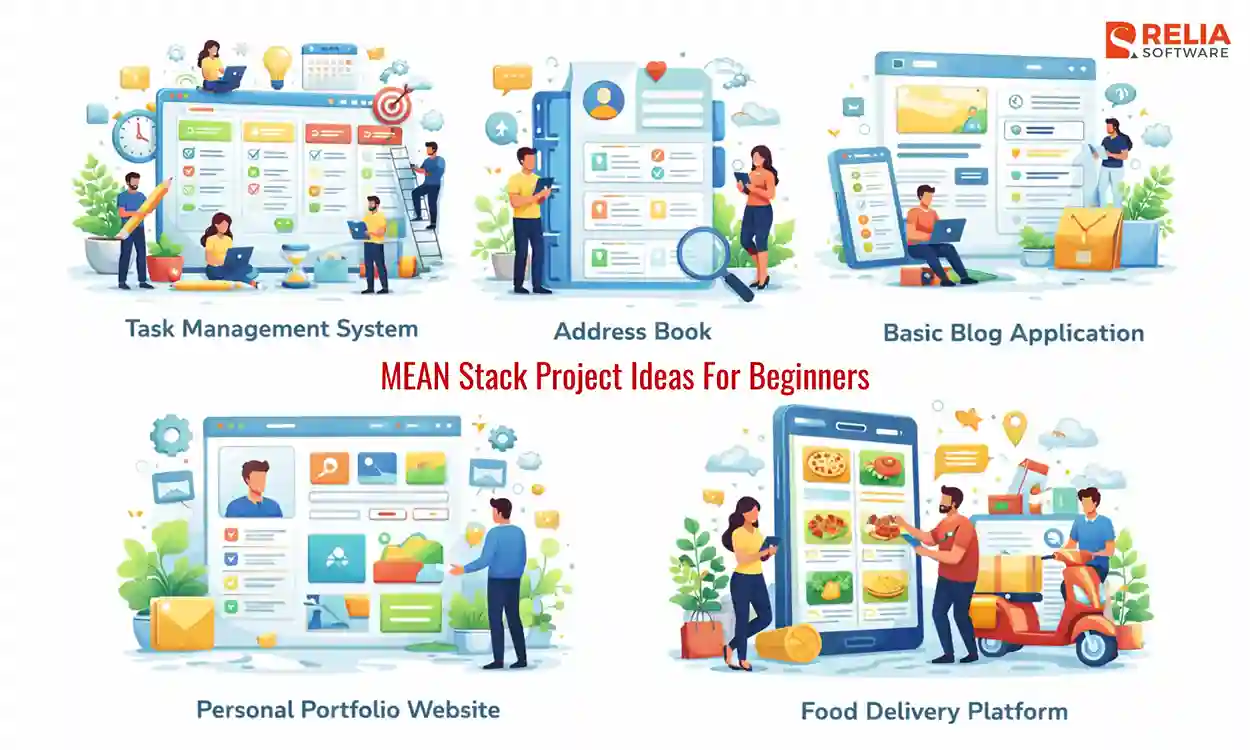
MEAN Stack Project Ideas For Beginners
These beginner projects focus on simple features and clear data flow, helping you understand how the MEAN stack works without getting overwhelmed by large systems or complex logic.
Task Management System
This project is a simple task app where users add, edit, group, and remove tasks. It focuses mainly on Angular for handling user actions and Express for processing requests on the server.
When a task is created, updated, or deleted, it is sent from the frontend to the backend, saved in the database, and returned to the screen. Through this repeated flow, developers can learn how frontend and backend connect and work together in a basic MEAN stack app.
Project Duration: 3–5 days
Core Features:
- Task creation and editing (Angular & Express)
- Task data storage (MongoDB)
- Task listing and filtering (Angular & REST API)
- Task deletion and status updates (Express & MongoDB)
- User interaction handling (Angular)
- Backend coordination (Node.js)
Learning Focus:
- Understand how the MEAN stack works end-to-end
- Learn frontend and backend data flow
- Build basic CRUD features
- Update the UI from stored data without reloading
Address Book
This project allows users to save and organize contact information, with a main focus on Angular forms and MongoDB data storage. The frontend lets users add, view, and edit contacts, while the backend saves and updates contact records in the database. Through this project, developers learn how structured data is created, stored, and updated in a full-stack app.
Project Duration: 5–7 days
Core Features:
- Contact creation and editing (Angular & Express)
- Contact data storage (MongoDB)
- Contact listing and search (Angular & REST API)
- Contact deletion (Express & MongoDB)
- Form handling and validation (Angular)
- Backend coordination (Node.js)
Learning Focus:
- Understand how user input is saved as data
- See how data moves from the database back to the screen
- Learn how forms, APIs, and databases work together
- Practice data storage, search, and filter basics
- Keep lists in sync with the database
Basic Blog Application
This project is a simple blog platform that allows users to write and manage posts. It focuses on developing skills in Express and MongoDB for content handling.
Posts are created through a form and stored in the database, then shown as a list and as individual pages. When a post or comment is edited or removed, the backend updates the stored data, and the changes appear right away. Through this project, developers learn how content-based data is stored, updated, and shared across pages in a full-stack app.
Project Duration: 7–10 days
Core Features:
- Blog post creation and editing (Angular & Express)
- Post and comment data storage (MongoDB)
- Post listing and detail pages (Angular & REST API)
- Comment submission and display (Angular & MongoDB)
- Content updates and deletion (Express)
- Backend coordination (Node.js)
Learning Focus:
- Build pages from stored data
- Manage related content like posts and comments
- Handle updates that affect what users see
- Use routing for list and detail pages
- Keep shared content in sync
Personal Portfolio Website
In this project, you will build a set of portfolio pages with a main focus on Angular for layout, routing, and data display. All content, such as project details, skills, and profile information, is stored in the database and loaded through the backend. When you update your resume or add a new project, only the data changes, and Angular updates the page automatically without changing the layout.
Project Duration: 3–6 days
Core Features:
- Page layout and routing (Angular)
- Portfolio content storage (MongoDB)
- Content loading via APIs (Angular & REST API)
- Project showcase sections (Angular)
- Contact form handling (Angular & Express)
- Backend coordination (Node.js)
Learning Focus:
- See how frontend layout connects to backend data
- Load and display data from APIs
- Update data without breaking the layout
- Use Angular to present real data cleanly
>> Read more:
- React vs Angular: Which is Better for Your Project?
- Next.js vs Angular: What Are The Differences?
Food Delivery Platform
This platform will let developers learn how to create a food delivery app and how multiple features stay in sync by focusing on full MEAN stack coordination. It separates what users see from how data is handled. In this project, Angular handles the frontend where users view menus, carts, and order progress, while the MongoDB backend manages order creation and status updates.
Project Duration: 10–14 days
Core Features:
- Restaurant and menu display (Angular & REST API)
- Menu and order data storage (MongoDB)
- Order placement and updates (Angular & Express)
- Order status tracking (Express & MongoDB)
- User interaction flow (Angular)
- Backend coordination (Node.js)
Learning Focus:
- Understand how larger apps manage connected actions
- Work with data that changes over time
- Build multi-step user flows
- Keep screens updated based on backend state
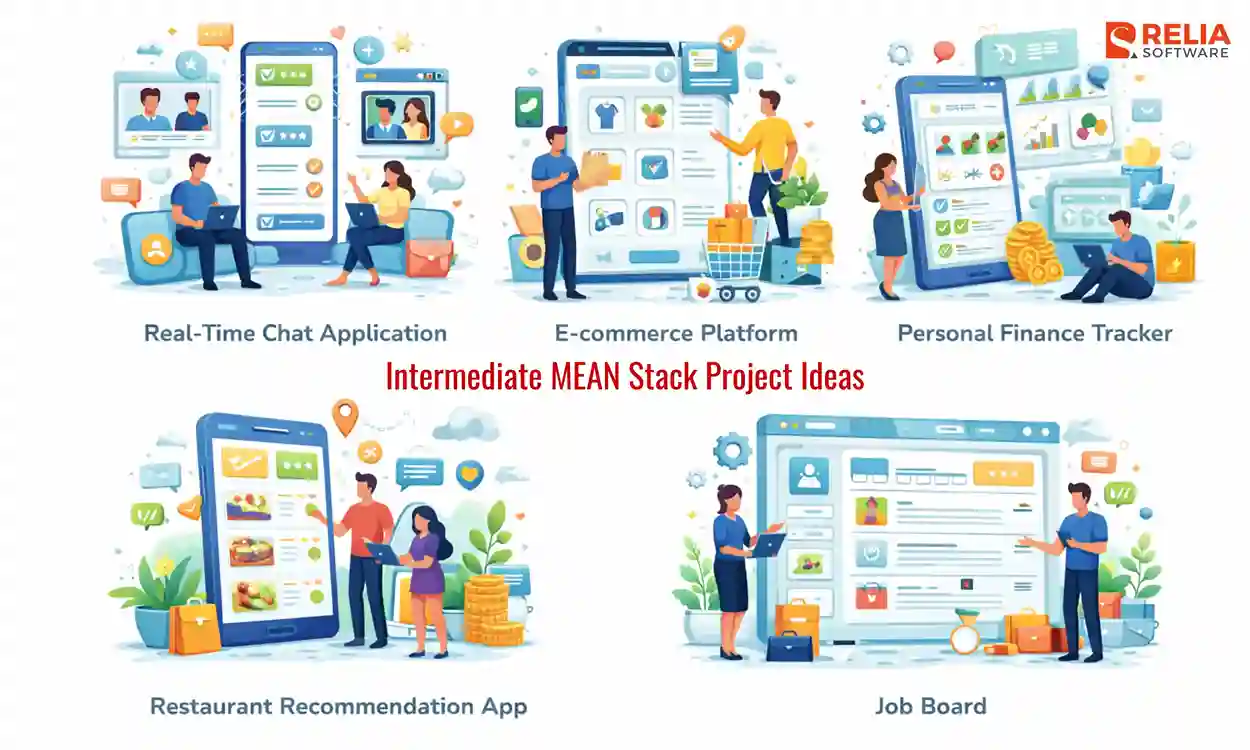
Intermediate MEAN Stack Project Ideas
Intermediate projects introduce real user flows, live data updates, and multiple connected features, pushing you to think beyond basic CRUD while still staying manageable.
Real-Time Chat Application
In this project, you’ll build a chat app that lets users talk to each other in real time. The frontend of the app focuses on showing messages as they arrive, while the backend manages the live connections and message flow.
When you receive a message, it will appear on the screen immediately, without needing to refresh the page. In contrast, when you send a message, it is pushed directly to the server and shared with others right away. Old messages are also stored in the database so that conversations can be viewed later.
Project Duration: 7–12 days
Core Features:
- Real-time message exchange (Angular & WebSockets)
- Message and chat room storage (MongoDB)
- Connection and event handling (Node.js)
- Message routing and broadcasting (Express & WebSockets)
- Chat interface and live updates (Angular)
- Backend coordination (Node.js)
Learning Focus:
- Handle open connections for live features
- Send data instantly between users
- Keep many users in sync at the same time
- Save changes to data safely in the database
>> Read more:
- Flutter Chatbot UI Tutorial: Build with Google’s Gemini API
- Build A Production-Ready React AI Chatbot with Streaming, RAG, & More
E-commerce Platform
This project focuses on building a basic e-commerce website where users can view products, add items to a cart, and place an order. When an order is submitted, the system saves the order details so users can view and manage later. Each step follows a clear flow between the screen, the server, and the database, giving you a clear view of how an e-commerce web works.
Project Duration: 12–18 days
Core Features:
- Product listing and detail pages (Angular & REST API)
- Product and order data storage (MongoDB)
- Shopping cart management (Angular)
- Order creation and checkout flow (Angular & Express)
- Mock payment handling (Express & Node.js)
- Backend coordination (Node.js)
Learning Focus:
- Design data models for related features
- Manage user flows with many steps
- Keeping related data consistent
- Backend-driven workflows
>> Read more:
- Why E-Commerce Businesses Necessitate A Mobile Application?
- A Complete Guide to Ecommerce Automation Software
- Optimize Next.js E-commerce Sites for Better SEO and Performance
Personal Finance Tracker
This project focuses on building a simple app to track personal income and expenses. Users record income and expenses by entering details such as amount, date, and category. The data is sent to the server, stored in the database, and used to create totals and summaries. The app then displays lists and charts that reflect these records, all on screen.
Project Duration: 7–12 days
Core Features:
- Income and expense entry (Angular & Express)
- Financial data storage (MongoDB)
- Category management and filtering (Angular & REST API)
- Budget summaries and totals (Express & MongoDB)
- Data visualization and charts (Angular)
- Backend coordination (Node.js)
Learning Focus:
- Manage structured data over time
- Build forms to collect user input
- Group records and create clear summaries
- Handle personal data in a simple, careful way
>> Read more: Digital Transformation in Banking and Financial Services
Restaurant Recommendation App
You’ll build this project by creating an app where users can find places to eat based on what they like from food type, location, or restaurant rating. The app sends these choices to the server, which asks a location service for matching restaurants. The results are filtered and then shown on the screen for users to decide. Some restaurant data can be saved so users can view it again later.
Project Duration: 5–9 days
Core Features:
- User preference input and search filters (Angular)
- Restaurant data retrieval from external APIs (Node.js & Express)
- Restaurant and rating data storage (MongoDB)
- Search results and recommendation display (Angular & REST API)
- Location-based filtering (Express)
- Backend coordination (Node.js)
Learning Focus:
- Work with external services and APIs development
- Send requests and handle responses
- Combine third-party data with your own data
- Show filtered results based on user choices
Job Board
This project focuses on building a hiring platform with different user roles. At its core, this project is about connecting employers, job seekers, and admins in one system. Employers submit job posts, candidates browse listings and apply, and admins review everything through a simple dashboard. Each action updates stored data, which then controls what appears on the site for other users.
Project Duration: 8–14 days
Core Features:
- Job posting and editing (Angular & Express)
- Job and application data storage (MongoDB)
- Job listing and search (Angular & REST API)
- Job application submission (Angular & Express)
- Admin review and approval flow (Express & MongoDB)
- Backend coordination (Node.js)
Learning Focus:
- Understand systems with multiple user roles
- Control data access for different users
- Manage approval and review flows
- Connect forms, listings, and backend logic
>> Read more:
- 12 Best HR Software For Small Businesses
- 10 Best HR Software Development Companies in Vietnam
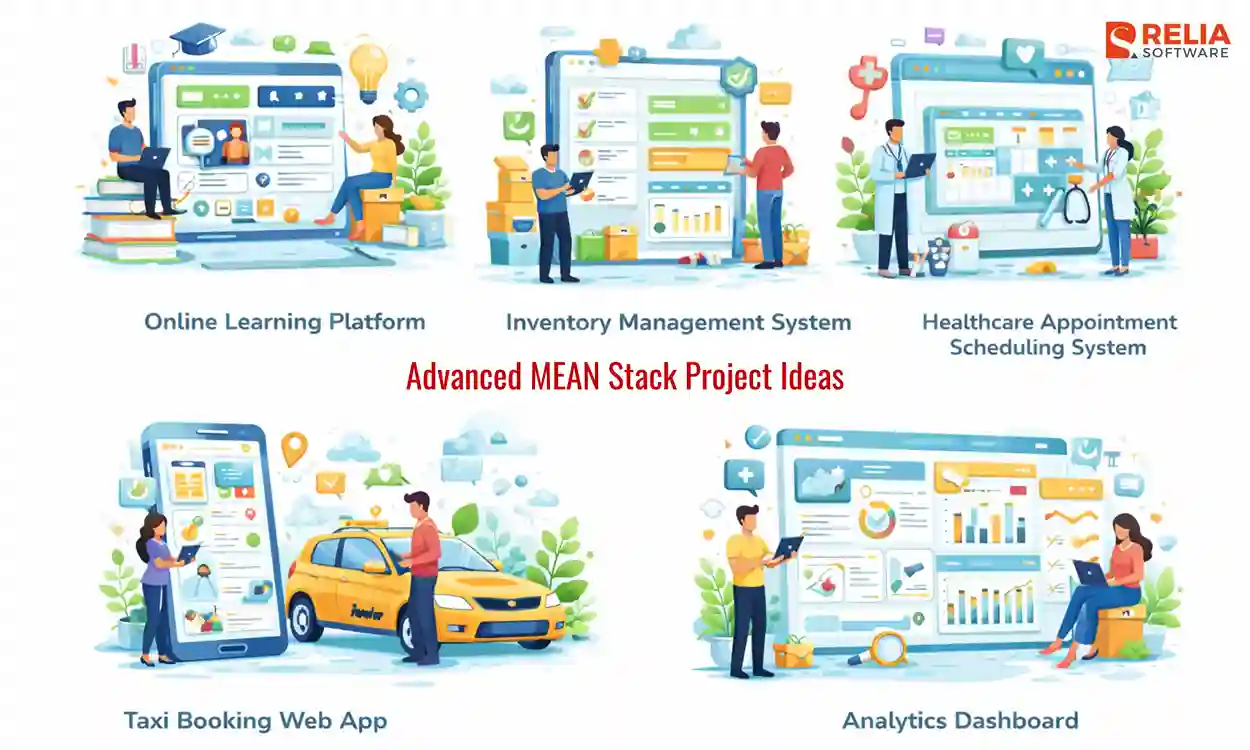
Advanced MEAN Stack Project Ideas
Advanced projects combine many moving parts into one system, requiring careful data design, role handling, and performance awareness, similar to real production applications.
Online Learning Platform
This project focuses on developing a large web app for students to self-learn online at home. Teachers add courses and lessons, and students enroll to watch content and complete quizzes. The system can save learning progress so students can leave and return without losing their place. This project is close to real education products used by schools and training centers.
Project Duration: 20–30 days
Core Features:
- Course and lesson management (Angular & Express)
- Course, user, and progress data storage (MongoDB)
- Lesson access and content delivery (Angular & REST API)
- Quiz creation and submission (Angular & Express)
- Progress tracking and completion status (Express & MongoDB)
- Backend coordination (Node.js)
Learning Focus:
- Understand how large systems are structured
- Manage different user roles
- Track long-term user activity
- Connect many features clearly
>> Read more: Top 11 E-learning App Development Companies in Vietnam
Inventory Management System
An inventory management system helps businesses track products, stock levels, and movement over time. It replaces spreadsheets with a central system where every stock change is recorded and can be reviewed later. This project focuses on accuracy, consistency, and long-term data use.
Project Duration: 14–21 days
Core Features:
- Product creation and updates (Angular & Express)
- Product and stock data storage (MongoDB)
- Stock in and stock out tracking (Express & MongoDB)
- Inventory listing and filters (Angular & REST API)
- Order and restock record handling (Angular & Express)
- Backend coordination (Node.js)
Learning Focus:
- Manage data that must stay accurate over time
- Design clear data structures
- Handle updates that affect totals
- Build reports from stored records
>> Read more:
- Top 6 Best Supply Chain Management Software
- Top 10 Innovative Mobile Applications for Logistics Companies
- 9 Key Logistics Technology Trends for Businesses
Healthcare Appointment Scheduling System
This project builds a system that helps clinics manage appointments of both doctors and patients in one place. Doctors first set their available time slots, and patients choose from those slots when booking appointments. The system will check for conflicts before confirming an appointment, helping reduce the confusion between the doctors, patients, and the clinic staff.
Project Duration: 18–28 days
Core Features:
- User registration and login (Angular & Express)
- Patient and doctor data storage (MongoDB)
- Doctor schedule and availability management (Angular & REST API)
- Appointment booking and updates (Angular & Express)
- Appointment and schedule validation (Express & MongoDB)
- Backend coordination (Node.js)
Learning Focus:
- Learn how to build software for healthcare services
- Handle sensitive data safely
- Manage role-based access
- Control schedules and prevent conflicts
- Keep data accurate and organized
>> Read more: Top 8 Healthcare Apps For Patients & Clinics
Taxi Booking Web App
This project builds a system that connects riders with nearby drivers and tracks each trip from request to completion. Riders enter pickup and drop-off locations to request a ride, and drivers receive nearby requests and choose one to accept. This project brings together live updates, location data, and many user actions in one flow.
Project Duration: 20–30 days
Core Features:
- Ride request and booking flow (Angular & Express)
- Rider, driver, and trip data storage (MongoDB)
- Location tracking and map display (Angular & external APIs)
- Real-time ride status updates (Node.js & WebSockets)
- Driver assignment and ride management (Express & MongoDB)
- Backend coordination (Node.js)
Learning Focus:
- Understand how real-time systems work
- Handle live updates as they happen
- Manage location-based data
- Coordinate actions between multiple users
Analytics Dashboard
An analytics dashboard is a web app that collects data, groups it into summaries, and shows the results in charts. Instead of viewing raw records, users can see totals, trends, and comparisons, all in one place. This project focuses on data aggregation, chart display, and caching results so the app stays fast even when data grows.
Project Duration: 7–14 days
Core Features:
- Raw data collection and storage (MongoDB)
- Data aggregation and summaries (Express & MongoDB)
- Chart and table display (Angular)
- Dashboard data loading (Angular & REST API)
- Cached query results (Node.js)
- Backend coordination (Node.js)
Learning Focus:
- Turn large datasets into clear summaries
- Group and analyze data
- Show insights with charts and tables
- Improve performance using caching
>> Read more:
- Top 9 Angular Projects for Developers of All Levels
- Top 15 Node.js Projects for Beginners and Professionals
- 9 Best Full-Stack Project Ideas for Beginners to Professionals
Conclusion
Building MEAN stack projects is a practical way to learn how full-stack applications work. By working through projects at different levels, you see how MongoDB, Express, Angular, and Node.js connect through real data and user actions. These projects help you build confidence, improve your skills, and get comfortable creating real-world applications using the MEAN stack.
>>> Follow and Contact Relia Software for more information!

- web development
- Web application Development